What Is a Lemma? A Plain Guide for Language Learners
A lemma is the dictionary form every inflected word points back to. Here is what that means for language learners, and why it matters more the more a language inflects.
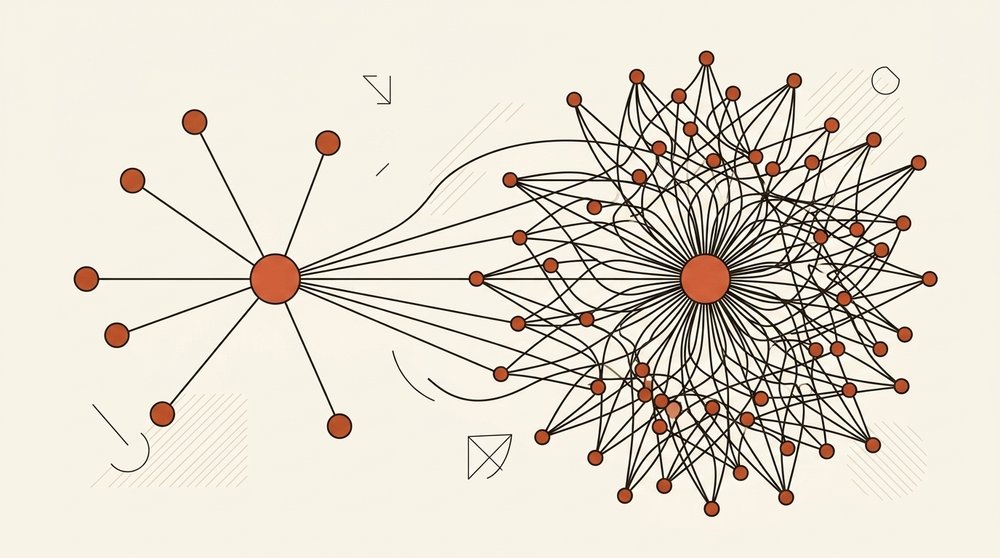
Open a dictionary, look up a word, and the bold entry at the top of each section is a lemma. That is the short answer to "what is a lemma." The longer answer matters more if you are learning a language, because the lemma is the unit you actually study, and almost everything you read on the page is something else.
Most of what gets written about lemmas is aimed at programmers building search engines. This is not that. A lemma is a plain idea once you see it from a reader's chair, and it explains one of the most disorienting parts of learning a heavily inflected language: why a word you already know keeps arriving looking like one you don't.
A lemma is the form you would look up
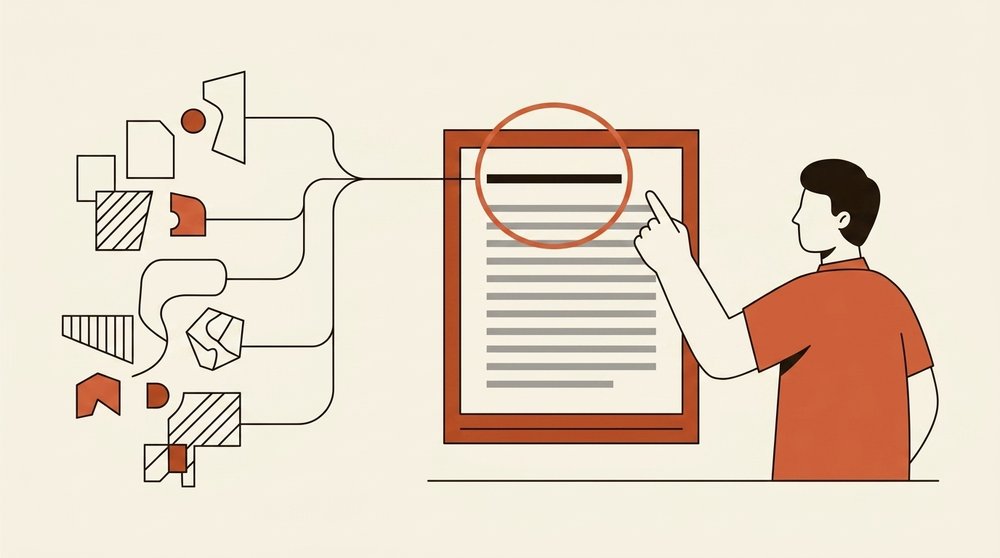
A lemma is the canonical, dictionary form of a word. It is the version a dictionary lists, the one you would write on a flashcard. Linguists also call it the citation form or the headword.
Every other shape a word takes in a sentence is an inflected form, or word form. The lemma "run" shows up in text as run, runs, ran, and running. Those four are different word forms of one lemma. You learned run once. The other three are not new vocabulary, they are run wearing different clothes.
The abstract word itself, the meaning that all four forms share, is the lexeme. The lemma is the specific form chosen to represent that lexeme in a dictionary. You do not need to track that distinction to learn a language, but it explains why "lemma" and "word" are not the same thing. One lexeme, one lemma, many word forms.
Lemma, word form, and stem are three different things
People mix up lemma and stem constantly, and the difference is worth getting right.
The stem is what is left after you strip a word's endings. For running, the stem is runn. A stem is not always a real word, and it is not always something you could look up. The lemma run is a real, listable word. The stem runn is a fragment.
This matters because a lemma is always a word you can find in a dictionary, while a stem is just a chunk of letters that a crude algorithm produced. When you study, you want lemmas. When a cheap tool processes text, it often gives you stems.
Lemmatization versus stemming
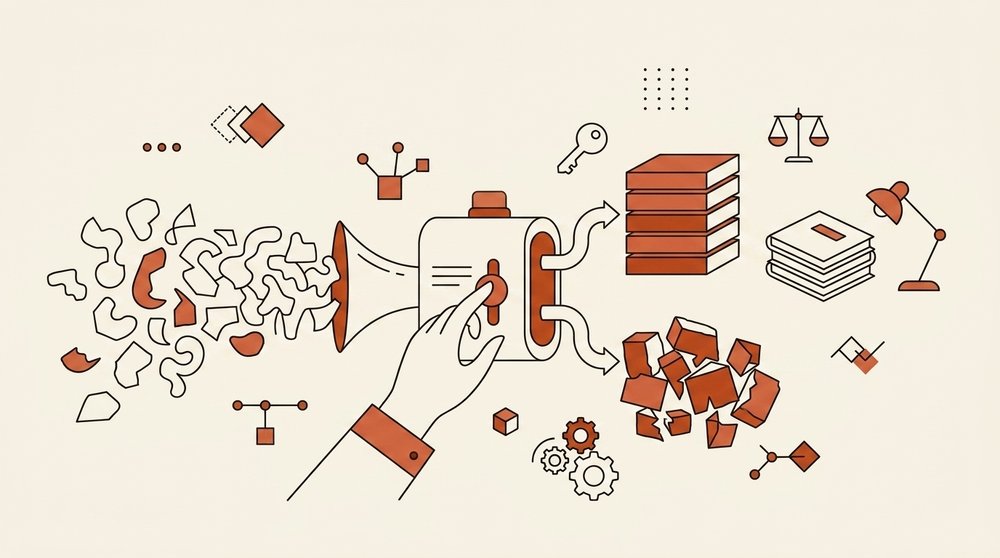
Reducing a word to its base form has two common methods, and they are not equal. The difference between them is the difference between a vocabulary that knows how its forms relate and one full of fragments.
Stemming chops off endings by rule. It is fast and dumb. Studies becomes studi. Better stays better, because stemming does not know that better is a form of good. Stemming produces fragments and misses every irregular word. The Stanford NLP group describes stemming as a crude heuristic that hacks off affixes and hopes for the best.
Lemmatization does the real work. It uses the word's actual grammar and a dictionary to find the true base form. Studies becomes study. Better becomes good. Ran becomes run. As IBM puts it, lemmatization considers the word's meaning and part of speech rather than just snipping characters off the end.
For a learner, lemmatization is the only version that helps. You want ran to point you back to run, the word you already know. Stemming would hand you ran and a shrug.
Why the lemma matters more the more a language inflects
Here is where this stops being theory. The number of word forms hiding behind a single lemma depends entirely on the language, and that number decides how much of your reading is spent meeting words you have already learned.
English barely inflects, so you rarely notice
English verbs have a handful of forms. Walk, walks, walked, walking. Nouns add an s and call it a day. The gap between a lemma and its word forms is small, so even a basic lookup tool gets you most of the way. An English learner can mostly ignore the whole problem.
This is why so much advice about base forms comes from English speakers who treat it as a minor convenience. In English, it is.
Icelandic and Finnish are a different world
Step into a heavily inflected language and the picture changes fast.
A single Icelandic noun can appear in roughly sixteen shapes once you count four cases, singular and plural, and definite and indefinite forms. Verbs go much further. If your reading tool does not know that all of those trace back to one lemma, every form arrives as if it were a brand new word, with nothing to tell you that you have met this one a dozen times already in other clothes. Anyone working through Icelandic runs into this in the first week.
Finnish is the famous case. By common counts, a single Finnish noun has well over 2,000 possible forms once you stack its fifteen cases together with possessive endings and clitics. No learner memorizes 2,000 forms of one word. You learn the lemma and you let an analyzer tell you which lemma each form belongs to. Without that, a page of Finnish reads as hundreds of unrelated words instead of a few dozen wearing different endings.
Polysynthetic languages make the lemma essential, not optional
Languages like Kalaallisut take it to the limit. A single word can be an entire sentence, built from a stem plus a long chain of meaning-bearing pieces. There is often no way to look the word up at all unless something breaks it into its parts first. The usual rulebook flips here, too: the stem is the dictionary form. Laesi decomposes each long word into its morphemes and tracks every piece, stem and affixes alike, the way it tracks a word anywhere else. Here the analysis is not a convenience that tidies your list. It is the only door into the text. You can see how the supported languages line up across these types on the full language list.
How a real reader uses lemmas
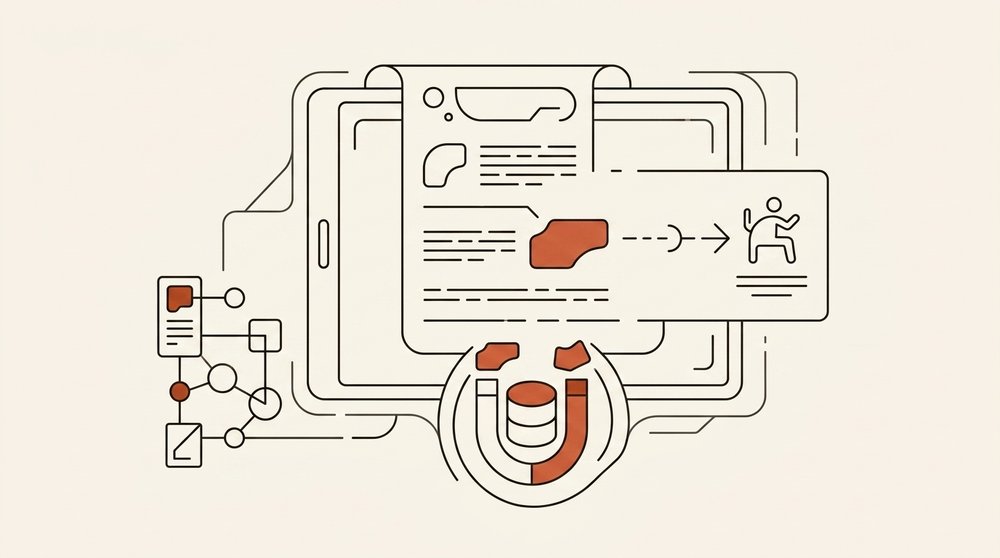
This is the gap Laesi is built to close. A reading app is only as good as its ability to recognize the connection between hljóp and hlaupa, the verb you already saved.
Laesi runs real morphological analysis on what you read. When it meets an inflected form, it identifies the lemma and relates the form to it in your own vocabulary database. Knowing a lemma does not mean you will recognize every shape it takes in the wild, so Laesi tracks each form separately, tied back to its lemma along with the form's own grammar details. A genuinely new word stands out because it is actually new. A new form of a word you know shows up as a new form, not as a stranger.
The analysis comes from serious open tools rather than a guess. Laesi wires in three analyzer families: spaCy for the modern European languages, Voikko for Finnish, and the GiellaLT finite-state analyzers for the Sámi languages, Faroese, Irish, Old Norse, Kalaallisut, and more. These are years of academic and community work, and they are the difference between a lemmatizer that handles ran to run and one that genuinely handles the morphology of a language where one word carries fifteen endings.
The practical payoff is simple. You read more, you look words up less, and your vocabulary list stays honest. The words that matter keep coming back until you know them, and the ones that never come back were never worth the effort. The goal was never to know every word you met. The lemma is the quiet idea that makes all of that work.
Frequently asked questions

What is a lemma in simple terms?
A lemma is the dictionary form of a word, the version you would look up or write on a flashcard. Run is the lemma behind runs, ran, and running. Every inflected form of a word shares one lemma.
What is the difference between stemming and lemmatization?
Stemming chops endings off a word by rule and often produces a fragment that is not a real word, like studi from studies. Lemmatization uses grammar and a dictionary to find the true base form, turning studies into study and ran into run. Lemmatization is accurate and handles irregular words. Stemming is fast but crude.
Is a lemma the same as a root or a stem?
No. A stem is what remains after you strip endings, and it may not be a real word. A root is the core historical kernel of a word. A lemma is always a complete, listable dictionary word. For studying vocabulary, the lemma is the form you want. The exception is polysynthetic languages like Kalaallisut, where the stem itself is the dictionary form.
What is an example of a lemmatizer?
A lemmatizer is the tool that maps word forms to lemmas. Common open examples include spaCy for modern European languages, Voikko for Finnish, and the GiellaLT analyzers for minority and historical languages. Laesi uses all three so it can lemmatize across very different language types.
Why does lemmatization matter for language learning?
In heavily inflected languages, one word can have dozens or thousands of forms. Without lemmatization, every form looks like new vocabulary, and you cannot tell the genuinely new words from familiar ones in disguise. Lemmatization relates every form back to the single word you are actually learning, without hiding which forms you have and have not met.
Does English need lemmatization?
English inflects very little, so the benefit is small and a basic lookup usually suffices. The payoff grows enormous in languages like Finnish, Icelandic, or Kalaallisut, where a single lemma can stand behind hundreds or thousands of word forms.
Come read with us
If you learn languages by reading native content, or want to start, there is a Laesi Discord community for exactly that. No purchase necessary. Come tell us what you are reading.
Read what you actually want to read.
Laesi is a one-time purchase for Mac, Windows, and Linux: all 60+ languages, free updates for life.