What Is Ultrareading? Reading With the Audiobook Playing
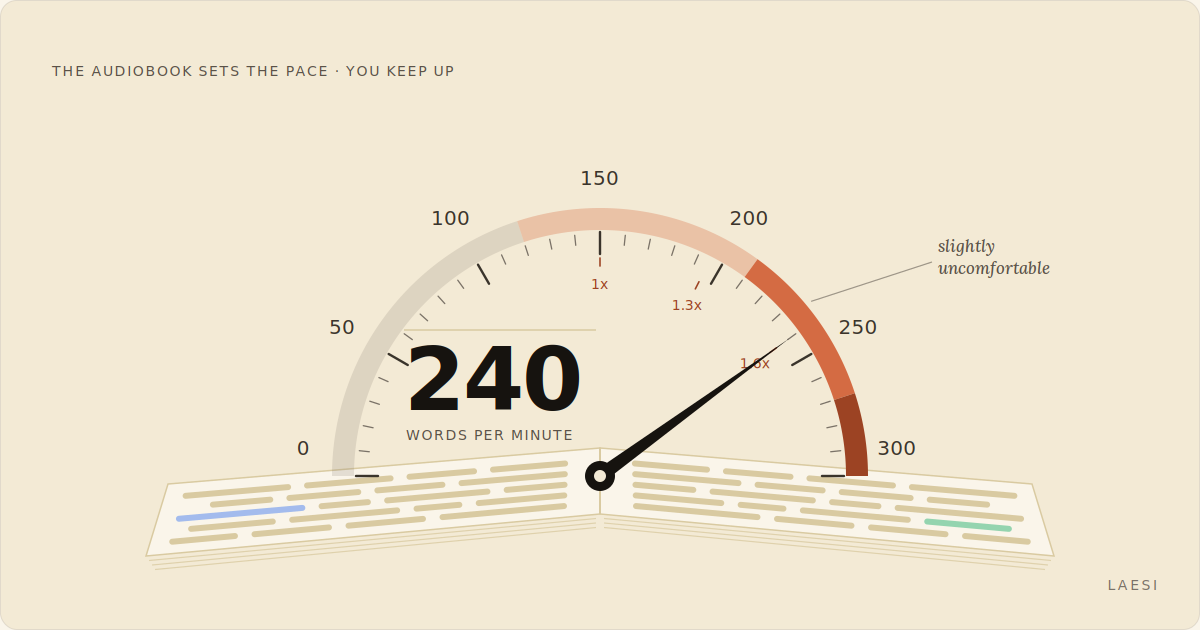
Ultrareading is reading a novel while the audiobook plays, sped up until it is slightly uncomfortable. It gets you extensive reading benefits sooner.
It may seem odd to have one of our first blog posts start in the middle of the journey, but odds are that if you are reading this, you are a good candidate for this method. This article is part of a series on what learners at an intermediate level can do to become fluent in their target language.
Starting here means planting a lot of seeds for future articles, and defining a few terms along the way.
What is Ultrareading?
In plain language, Ultrareading is reading a novel while listening to the audiobook. The audiobook is used as a way to force you to keep reading, and as you get more comfortable with the process, you start to increase the speed of the audiobook until it is slightly uncomfortable. Ultrareading with a tool like Laesi gets you extensive reading benefits well before you can read extensively unassisted.
The idea is not mine. Researchers call it reading while listening, or RWL if you go looking for the literature, and they have been measuring it for decades. In one study of 64 secondary school students over 26 weeks, the group that read with audio gained 43 words per minute of reading speed while the silent readers gained 18, and the audio group also comprehended more of what they read.
What the studies do not do is push it. Ultrareading is RWL cranked up to eleven. A real novel instead of a graded reader, in whatever language you happen to be learning. The narrator pushed past comfortable, not left at whatever speed the studio recorded. And every word on the page tracked, so looking one up costs you a click rather than your place in the sentence.
Why would I Ultraread?
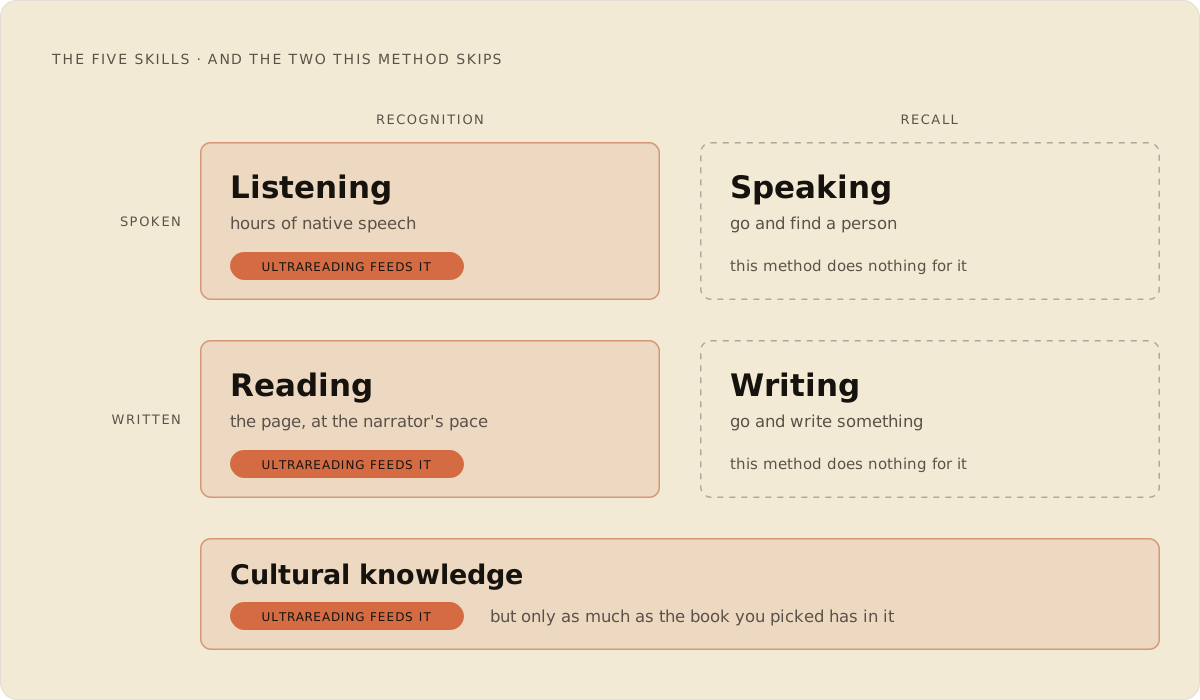
The best arguments are improved comprehension and efficiency of time. With an effective method, learning a language to fluency is ultimately a numbers game. Are you putting in the time required to stretch your brain to be able to understand and produce the language in a fluent manner? This can be distilled into five skills. Two are recognition, two are active recall, and one is often forgotten.
- Listening
- Speaking
- Reading
- Writing
- Cultural knowledge
The obvious ones are listening, speaking, reading and writing. Listening and reading are recognition. Speaking and writing are recall. Every day you may hear someone use a word that you immediately understood or recognized, but that is not a part of your active vocabulary. Recall is your ability to reach for words while communicating and use them correctly. As our brains build a model for how the language works these things self-reinforce, but each one still needs its own dedicated practice.
On cultural knowledge, I think that when you view language acquisition as a simply skills based exercise, it is easy to forget that natural languages are spoken by groups of people in the real world. They have things they care about, media they consume, and the language they speak emerged naturally from their lives. Learning to speak a language like a native involves learning about those things yourself, and, importantly, having opinions about them.
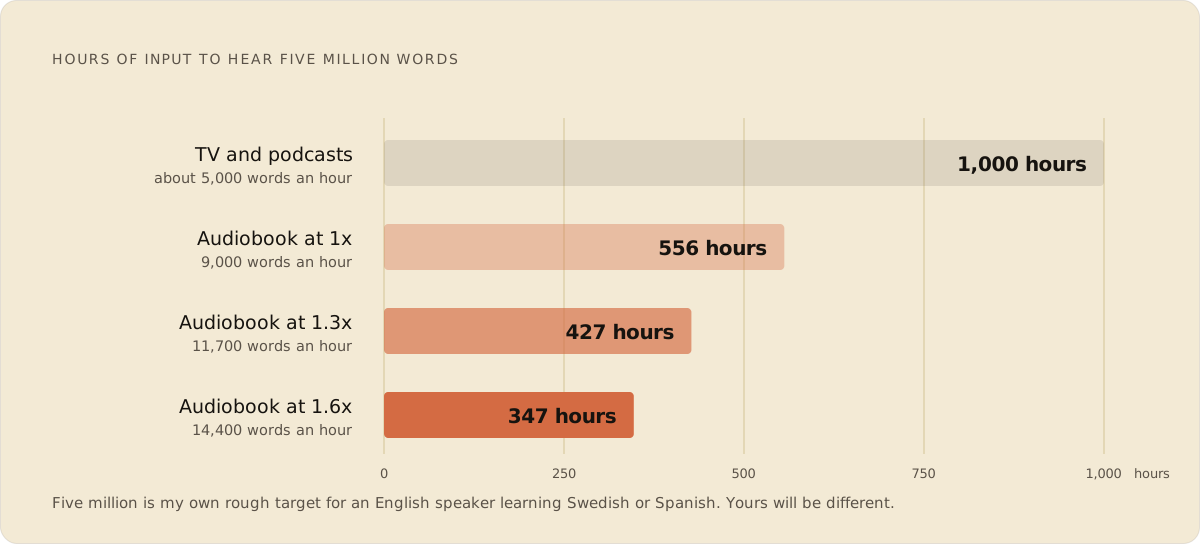
Returning now to Ultrareading. It takes hundreds and thousands of hours of listening practice to be able to understand native speech. Or rather, it takes us hearing millions and millions of words to build that model in our brains, and this is just time spent listening. An average adult TV show in an analytical language (English, Swedish, Chinese) will have 4,000 to 6,000 words per hour. Exactly how much time, or how many words, you need to hear to understand native speech in context depends wildly on the individual. For a native English speaker learning an easier language like Spanish or Swedish, though, five million words is a reasonable place to aim. Five million words of adult TV shows or podcasts is a thousand hours. Audiobooks are an entirely different story.
An average audiobook in English runs at 150 words per minute, or 9,000 words per hour at 1x speed. That is the same number the audiobook industry plans with. With audiobooks alone, that window shrinks from a thousand hours to a little over five hundred. Then factor in reading.
If five million sounds like a number I made up, it is at least in reasonable company. Paul Nation went and counted, and found that it takes roughly three million words of input before a learner meets the words in the ninth thousand frequency band often enough to actually acquire them. Two to twenty-five novels, in his terms. Whatever your own number turns out to be, it is large, and words per hour is the one part of it you control.
At this point, I can already hear you tuning out by saying things like, I cannot listen to audiobooks. I do not understand them. This is not going to be helpful to me. This is where reading, and tools like Laesi, come into play.
How to Ultraread
Step 1: Pick a novel or short story in your target language
It must be:
- interesting to you
- something you are familiar with, ideally because you read it in your native language first
- available as both an ebook and an audiobook
Ideally it was written originally in your target language, but this may not be possible, especially if this is your first time truly reading.
Step 2: Import the ebook into Laesi
If this is your first time using Laesi, read the first chapter of your book marking each word appropriately. You would prefer not to start reading a book with every single word marked New.
Step 3: Start the audiobook and follow the words on the page
For each sentence, click each New word and quickly grab the first quick definition. Do not worry about the quality of the definition at this time. It only needs to be good enough for you to understand the word in context. For each word that is not yet Known, try to remember what it means before you look. If you understood the word in context, then increase the level. If you did not, then reduce it. Try to understand the entire sentence.
Prioritize following along with the audiobook, even if it means you miss a word here or there. If the word was important, it will come back, and you can always re-read.
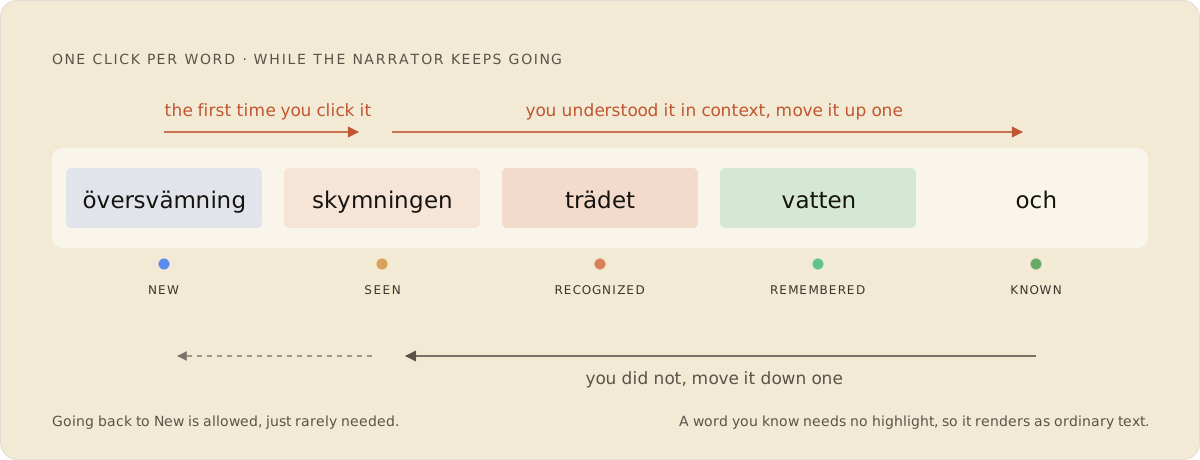
Every form you meet gets tracked on its own, tied back to the base form the analyzer found, which is a subject of its own. Knowing a word in one shape does not mean you will recognize it in the next one, and the levels are honest about that.
Just keep Ultrareading and trust. the. process.
Then as you get better at this, consider increasing the speed. 9,000 words per hour becomes 11,700 at 1.3x speed.
Each chapter can be a good stopping point, and I recommend reading sessions that are at least 25 minutes if possible, though everyone has a different situation. When you choose to stop, go to your dictionary and select at least five words that seemed important, then export them to Anki. If you noticed any words where the definition was not helping you understand them in context, this is also a good point to quickly research those words. Odds are, you are not the first person that has been confused by that word. Google, Wiktionary, Reddit and many other tools are your friend.
Is Ultrareading all I need?
Ultrareading is close to being a silver bullet, but it is not the only thing you should be doing. It optimally gives you well structured speech, and it is arguably the best way of understanding words in context, but there are still some things to consider.
First, people do not talk like they do in books, and if you only ever listen to audiobooks you may start to say things in ways that do not sound natural to native speakers. You are what you eat applies to languages as well. That said, there are worse things than sounding overly educated.
Second, unless you have smart glasses, live conversations do not come with subtitles. You need practice listening to natural speech without the text as a crutch. Pick TV shows (preferably unscripted), podcasts, YouTube channels and the like, and listen to them. Reading without listening is also important, but less critical.
Third, you need lots of time practicing speaking, and Ultrareading does not help at all in this regard. Reading aloud along with the narrator is a start, and it has a name if you want to go looking for more of it, which is shadowing. It is not a substitute for talking to a person.
There is one honest caveat worth passing on from the research. A lab study published this year had readers work through a text with audio and a text without, and found a small comprehension cost for the audio version in that single sitting. The authors compare the audio to a marathon pacer, and suggest that the benefit shows up over the distance rather than in one measured mile. That matches my experience. The narrator is not there to help you understand this sentence. The narrator is there to stop you from spending four minutes on it.
What it gives you
- Higher comprehension, which is extensive or extensive-like reading
- Efficient use of time, covering reading, listening and cultural knowledge at once, at the speed of the input
- Text that always matches the speech
- Language that is well structured
What it does not
- Writing does not always reflect how people actually talk
- You still need time listening and time reading, just not at the same time
- Help with speaking or writing
Come read with us
If you learn languages by reading native content, or want to start, there is a Laesi Discord community for exactly that. No purchase necessary. Come tell us what you are reading.
Read what you actually want to read.
Laesi is a one-time purchase for Mac, Windows, and Linux: all 60+ languages, free updates for life.